Google Ads Cost in 2026: Complete Pricing Guide for Businesses
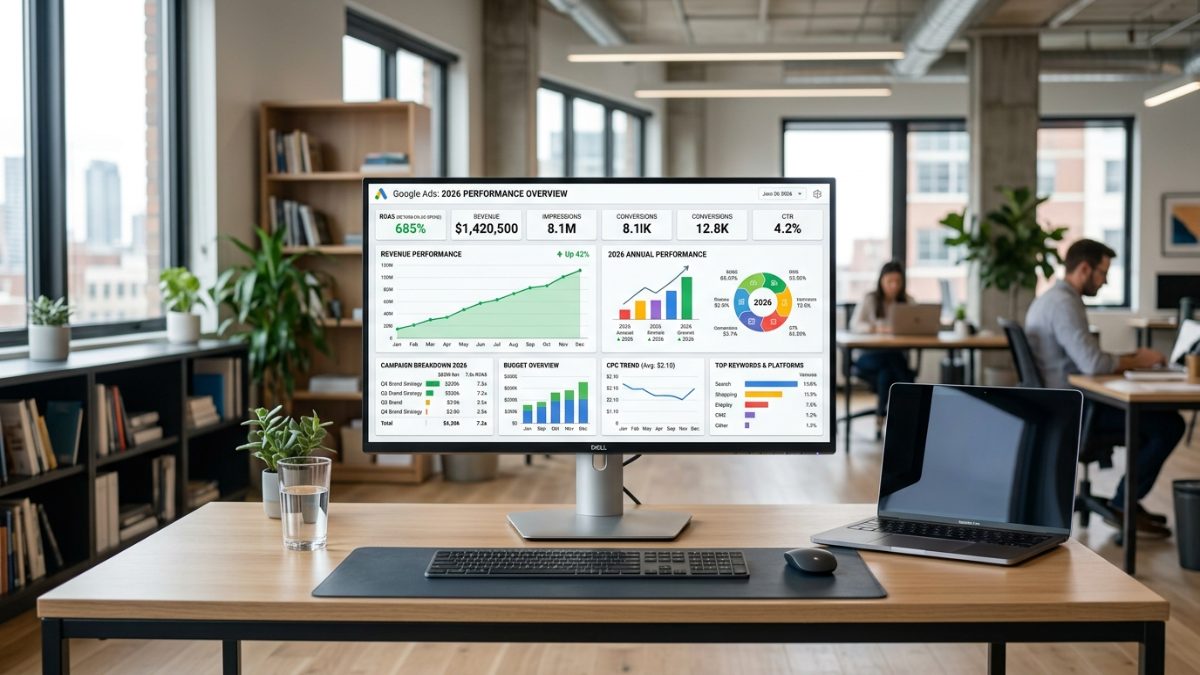
Understanding how much Google Ads costs is one of the most important decisions you'll make before investing in paid search. Whether you're a startup testing the waters or an enterprise scaling campaigns, having a clear picture of Google Ads pricing helps you allocate budget wisely, set realistic expectations, and maximize return on investment.
In this comprehensive guide, we break down everything you need to know about Google Ads cost in 2026 — from average cost per click (CPC) by industry to monthly budget recommendations, hidden costs, and proven strategies to reduce your ad spend while improving results.
How Google Ads Pricing Works
Google Ads operates on a pay-per-click (PPC) auction system. You don't simply pay a fixed rate — your actual cost per click is determined by several dynamic factors working together in real time.
The Auction System
Every time a user searches on Google, an automated auction determines which ads appear and in what order. Your maximum bid (the most you're willing to pay per click) competes against other advertisers targeting the same keyword.
Quality Score
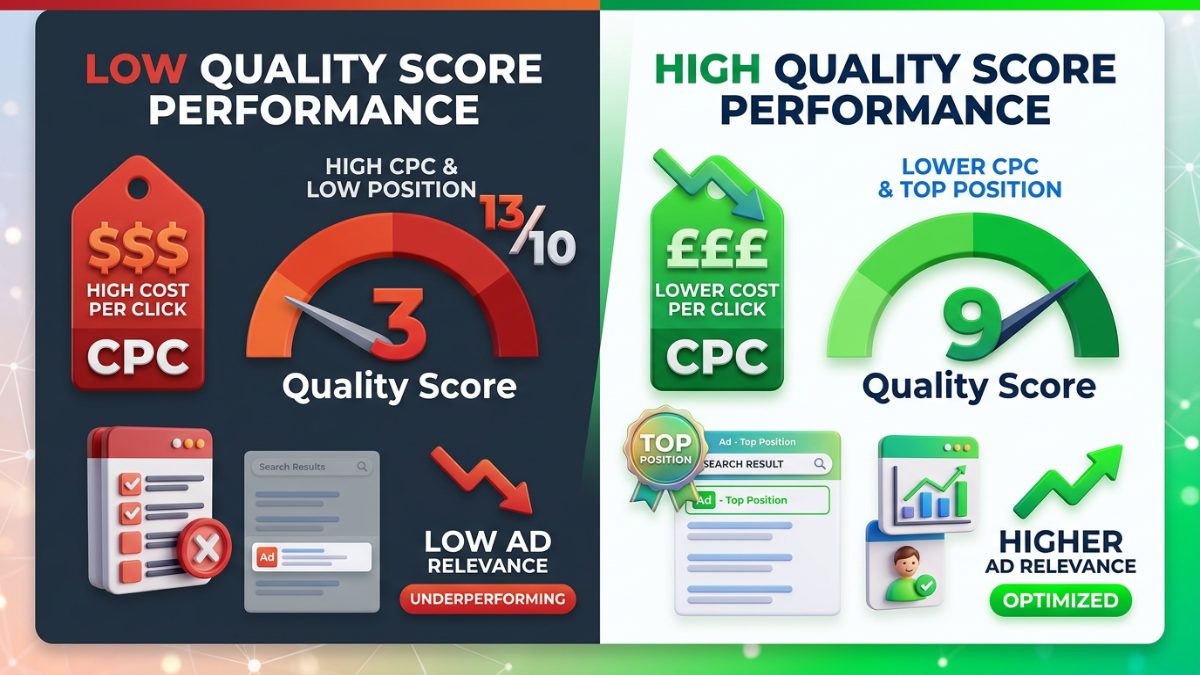
Google assigns a Quality Score (1–10) to each keyword based on three factors: expected click-through rate, ad relevance, and landing page experience. A higher Quality Score means you pay less per click while achieving better ad positions.
Competition & Industry Factor
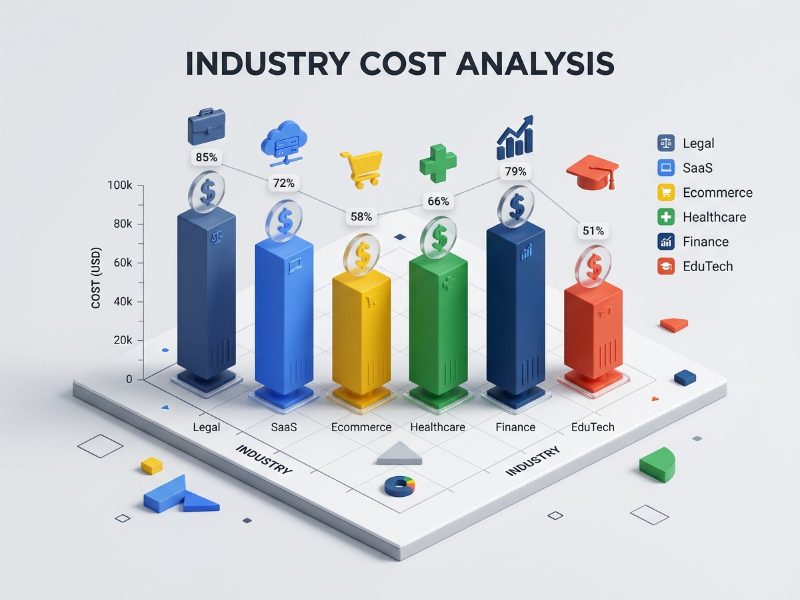
Industries with high customer lifetime value — such as legal, insurance, and SaaS — naturally have higher CPCs because advertisers are willing to pay more for each conversion. The level of competition in your specific market directly impacts what you'll pay.
Average Cost Per Click by Industry
CPC varies significantly across industries. Here are estimated average ranges for 2026:
|
Industry |
Average CPC Range |
|---|---|
|
Ecommerce |
$0.50 – $2.50 |
|
Real Estate |
$1.50 – $5.00 |
|
SaaS / Technology |
$3.00 – $8.00 |
|
Healthcare |
$2.00 – $6.50 |
|
Legal Services |
$5.00 – $15.00+ |
Legal and insurance sectors consistently rank among the most expensive due to the high value of each client acquisition. Ecommerce tends to have lower CPCs but requires higher volume to generate meaningful revenue.
These figures represent averages — your actual CPC depends on keyword specificity, geographic targeting, and campaign optimization.
What Affects Google Ads Cost?
Multiple factors influence your Google Ads spending. Understanding these helps you control costs more effectively.
Keyword Competition
High-competition keywords like "best CRM software" or "personal injury lawyer" cost significantly more than long-tail alternatives. Targeting specific, intent-driven phrases often delivers better ROI at lower cost.
Keyword Intent
Commercial and transactional keywords (e.g., "buy," "hire," "get quote") carry higher CPCs than informational queries. However, they also convert at much higher rates, making the investment worthwhile.
Landing Page Quality
Google rewards advertisers who provide excellent post-click experiences. A well-optimized landing page improves your Quality Score, directly reducing your CPC and improving ad rank.
Geographic Targeting
Advertising in major metropolitan areas costs more than targeting smaller cities or rural regions. International campaigns see even wider CPC variation based on local market competition.
Ad Quality & Relevance
Compelling ad copy with strong relevance to the search query improves click-through rates, which feeds back into a higher Quality Score and lower costs. Ad extensions, responsive search ads, and structured snippets all contribute to better performance.
Monthly Budget Recommendations
There's no universal budget that works for every business. Here are practical guidelines based on business size and goals:
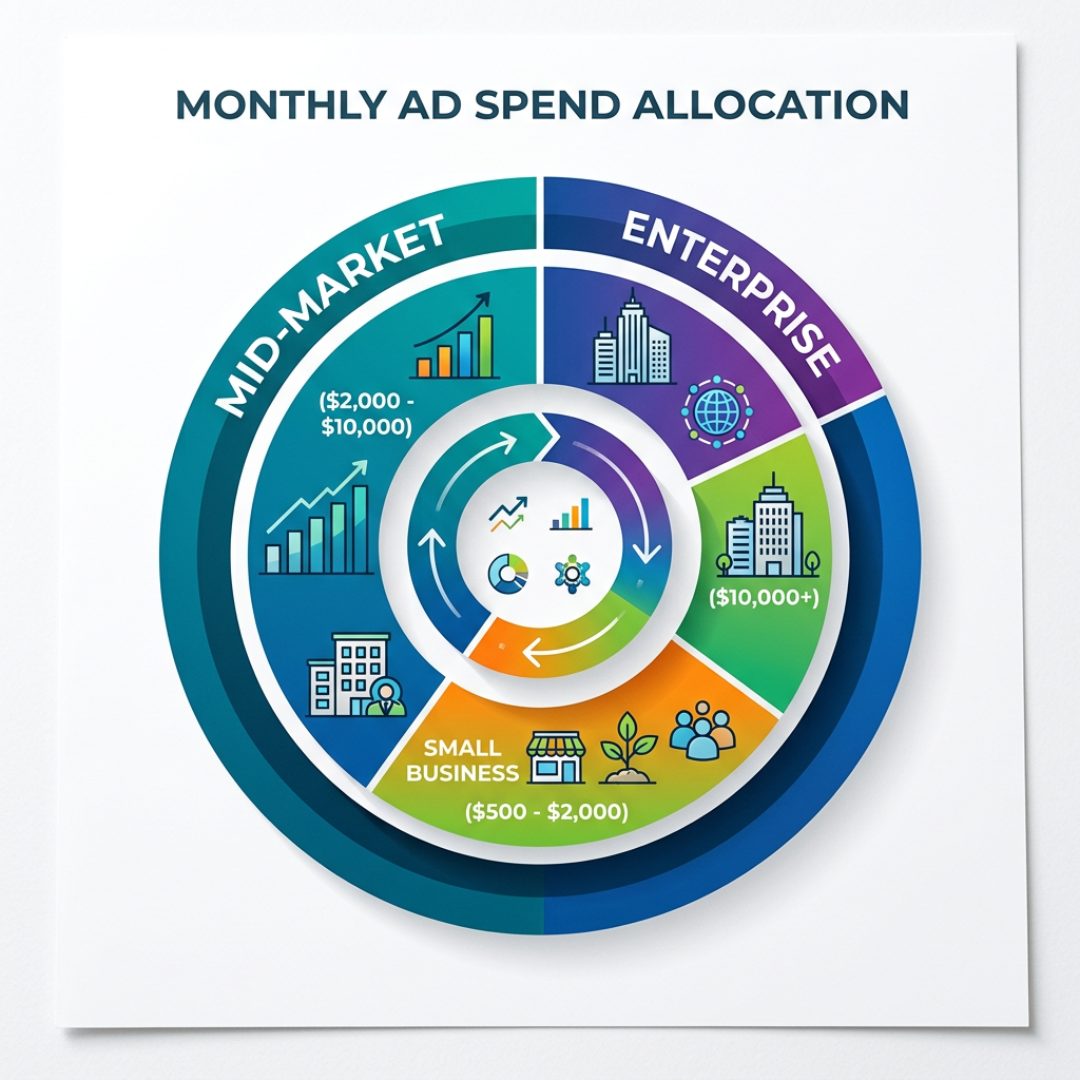
Small Businesses — $500 – $2,000/month
Ideal for testing keywords, building initial data, and establishing baseline performance metrics. Focus on a narrow set of high-intent keywords in your local market.
Mid-Size Businesses — $2,000 – $10,000/month
Allows for broader keyword coverage, A/B testing ad variations, and scaling campaigns across multiple product lines or service areas. This range typically generates enough conversion data for meaningful optimization.
Enterprise — $10,000 – $50,000+/month
Supports aggressive market domination strategies, multi-channel campaigns, and advanced automation. Enterprise budgets enable sophisticated bidding strategies like Target ROAS and maximize conversion volume.
Testing Budget
If you're new to Google Ads, allocate at least $1,000–$1,500 for an initial 30-day testing phase. This provides enough click data to identify winning keywords, ad copy, and audiences before scaling.
Is Google Ads Worth the Cost?
From a pure ROI perspective, Google Ads remains one of the most effective digital advertising channels available. According to Google's Economic Impact Report, businesses typically earn $8 for every $1 spent on Google Ads and Search.
The key advantage of PPC advertising is intent-based targeting. Unlike social media advertising where you interrupt users, Google Ads captures people actively searching for your products or services. This translates to higher conversion rates and more predictable customer acquisition costs.
When managed by an experienced Google Ads agency, campaigns consistently deliver measurable returns. The businesses that struggle with Google Ads profitability typically suffer from poor campaign structure, inadequate tracking, or unoptimized landing pages — not the platform itself.
Hidden Costs of Google Ads
Your ad spend is only part of the total investment. Factor these additional costs into your budget planning:
Management Fees
Professional Google Ads management typically costs $500–$5,000/month or 10–20% of ad spend. While self-management is possible, experienced managers consistently deliver better ROI through strategic optimization.
Landing Page Optimization
Driving traffic to a poorly converting page wastes budget. Investing in landing page optimization ensures your clicks convert into leads or sales at the highest possible rate.
Conversion Rate Optimization (CRO)
Beyond landing pages, your entire conversion funnel needs attention. CRO services help identify and fix friction points that prevent visitors from completing desired actions.
Tracking & Analytics Setup
Proper conversion tracking, Google Analytics configuration, and attribution modeling require technical setup. Without accurate tracking, you can't measure true campaign performance or make data-driven optimization decisions.
How to Reduce Google Ads Cost
Smart optimization can significantly lower your cost per acquisition without sacrificing results.
Improve Quality Score
Focus on ad relevance, expected CTR, and landing page experience. Even a one-point improvement in Quality Score can reduce CPC by 10–15%.
Use Negative Keywords
Regularly audit search term reports and add irrelevant queries as negative keywords. This prevents wasted spend on clicks that will never convert.
Optimize Landing Pages
Ensure fast load times, mobile responsiveness, clear value propositions, and prominent calls-to-action. Landing page quality directly impacts both Quality Score and conversion rates.
Implement Conversion Tracking
Track all meaningful actions — form submissions, phone calls, purchases, and micro-conversions. Accurate data enables Google's automated bidding strategies to find your most valuable customers at the lowest cost.
🎯 Image PlaceholderBefore/after Quality Score improvement visual — showing CPC reduction and CTR improvement after optimization.
Google Ads vs Facebook Ads Cost Comparison
|
Factor |
Google Ads |
Facebook Ads |
|---|---|---|
|
Average CPC |
$1.00 – $5.00 |
$0.50 – $2.00 |
|
Intent Level |
High (search-based) |
Low-Medium (interest-based) |
|
Best For |
Lead gen, services, high-intent |
Brand awareness, ecommerce, retargeting |
|
Conversion Rate |
3–5% average |
1–3% average |
|
Learning Curve |
Moderate-High |
Moderate |
While Facebook Ads generally have lower CPCs, Google Ads typically delivers higher-quality leads due to search intent. Most successful businesses use both platforms strategically — Google Ads to capture demand and Facebook Ads to generate awareness and retarget engaged audiences.
According to WordStream's industry benchmark data, the combination of search and social advertising delivers the strongest overall ROI.
Frequently Asked Questions
What is the minimum Google Ads budget?
There is no official minimum. You can start with as little as $5/day. However, for meaningful data and results, we recommend a minimum of $500–$1,000/month depending on your industry and competition level.
How much does Google Ads cost per month?
Most small to mid-size businesses spend between $1,000 and $10,000 per month on Google Ads. Your ideal budget depends on your industry, target keywords, geographic focus, and business goals.
Is Google Ads expensive?
Google Ads cost is relative to the return it generates. A $5 click that produces a $500 sale is an excellent investment. The platform becomes "expensive" only when campaigns are poorly managed or targeting the wrong audience.
Can small businesses afford Google Ads?
Absolutely. Small businesses can start with focused, geo-targeted campaigns on a modest budget. The key is strategic keyword selection, tight targeting, and continuous optimization to maximize every dollar spent.
How quickly do Google Ads results show?
You can see traffic within hours of launching a campaign. However, meaningful performance optimization typically takes 2–4 weeks of data collection. Most campaigns reach peak efficiency within 60–90 days of consistent management.
Should I manage Google Ads myself or hire an agency?
If your monthly budget exceeds $2,000 or you're in a competitive industry, professional management typically pays for itself through improved performance. An experienced agency brings strategic expertise, advanced tools, and ongoing optimization that most business owners can't replicate independently.
What is a good ROAS for Google Ads?
A good return on ad spend (ROAS) varies by industry, but most businesses target 4:1 or higher — meaning $4 in revenue for every $1 spent. Ecommerce brands often aim for 5:1 to 8:1 ROAS, while service businesses focus on cost per lead metrics.
Ready to Maximize Your Google Ads ROI?
Stop guessing about your ad spend. Our certified Google Ads specialists will audit your campaigns, identify cost-saving opportunities, and build a strategy that delivers measurable results.
Ready to Scale Your Brand?
Get a free strategy session with our digital marketing team. No commitments.